

“What makes the perfect homepage?”
It’s a question we hear constantly, and here’s the twist: it’s actually a trick question. While countless digital marketing gurus claim to have the universal formula for the ideal homepage, the reality is far more nuanced.
Let’s start with what the experts typically recommend. Most “ultimate homepage guides” will tell you that every homepage needs:
- A compelling hero section
- Clear value proposition
- Prominent call-to-action
- Trust signals
- Easy navigation
- Mobile responsiveness
And they’re not wrong, these are important foundational elements. But here’s what they miss: the perfect homepage isn’t about checking boxes. It’s about deeply understanding your specific audience and their unique journey.
What makes a good homepage?
There is no single perfect homepage. A good homepage is built around how your specific customers think and what they need first, not around a generic template. The standard elements like a clear value proposition and an obvious next step still matter, but the structure should mirror your buyer’s decision process. The same homepage that works for one company can fail for another with a different audience.
Let’s look at three real examples that challenge the “perfect homepage” template:
Conwed’s Digital Transformation
When we partnered with Conwed, a company with decades of industrial netting expertise, their website didn’t reflect their market leadership or deep technical knowledge. The challenge wasn’t just aesthetic, it was structural. Their valuable information was available, but the architecture didn’t align with how their customers searched for solutions.
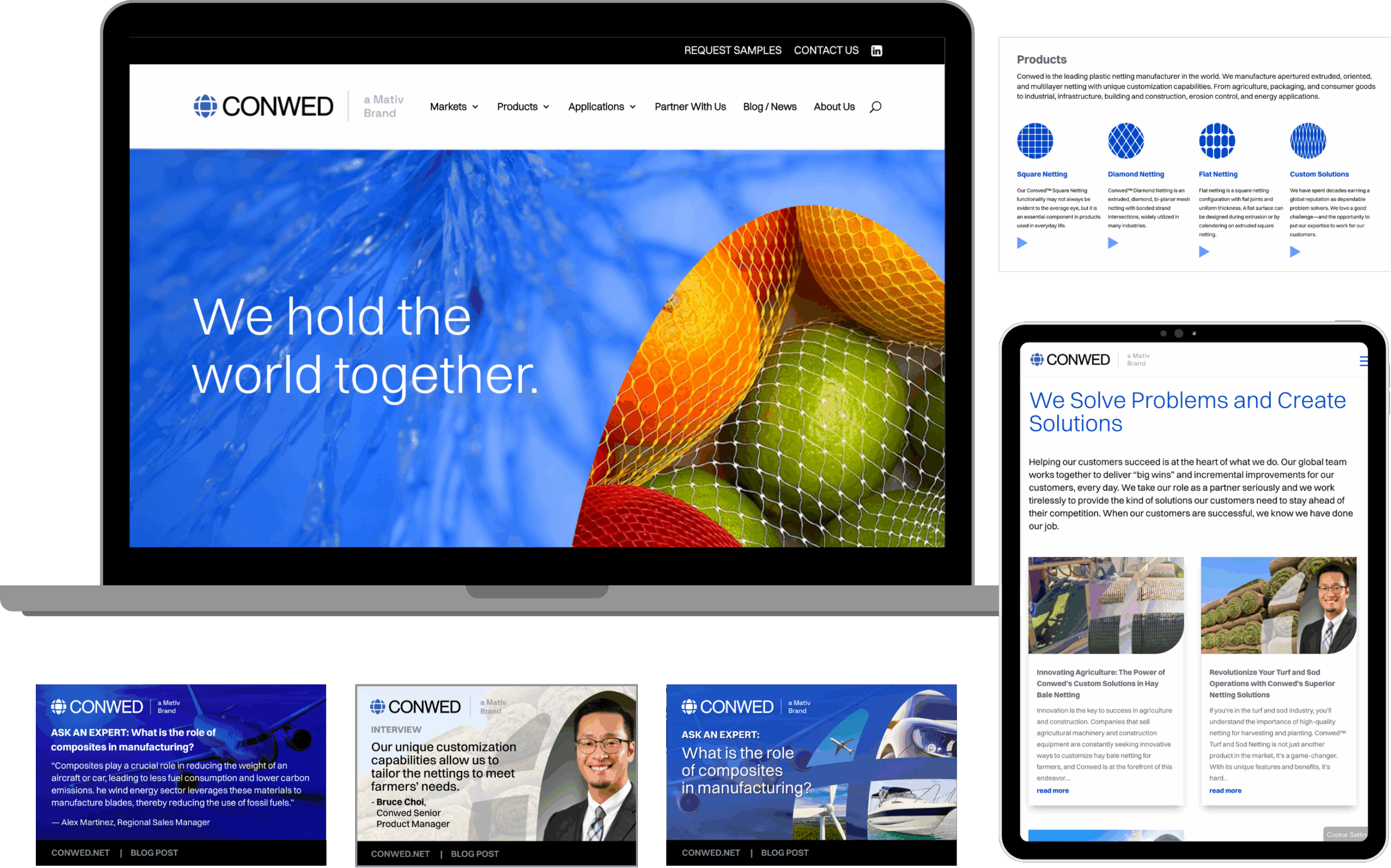
Building a new website allowed us to reimagine how Conwed’s expertise could be presented digitally. Rather than following conventional product-first navigation, we prioritized applications, end uses, and markets, mirroring how their customers think about netting solutions. This strategic reorganization had an unexpected bonus effect: it prompted Conwed to rethink how they organized their product information internally, creating alignment between their digital presence and their operational structure.
The result wasn’t just a more beautiful website for a historic brand, though it certainly is that. It became a more intuitive tool that matched their customers’ decision-making process. This transformation demonstrated how thoughtful digital architecture can influence not only user experience but also help evolve a company’s approach to and presentation of its offerings to the market.
Indafor’s Market-First Approach
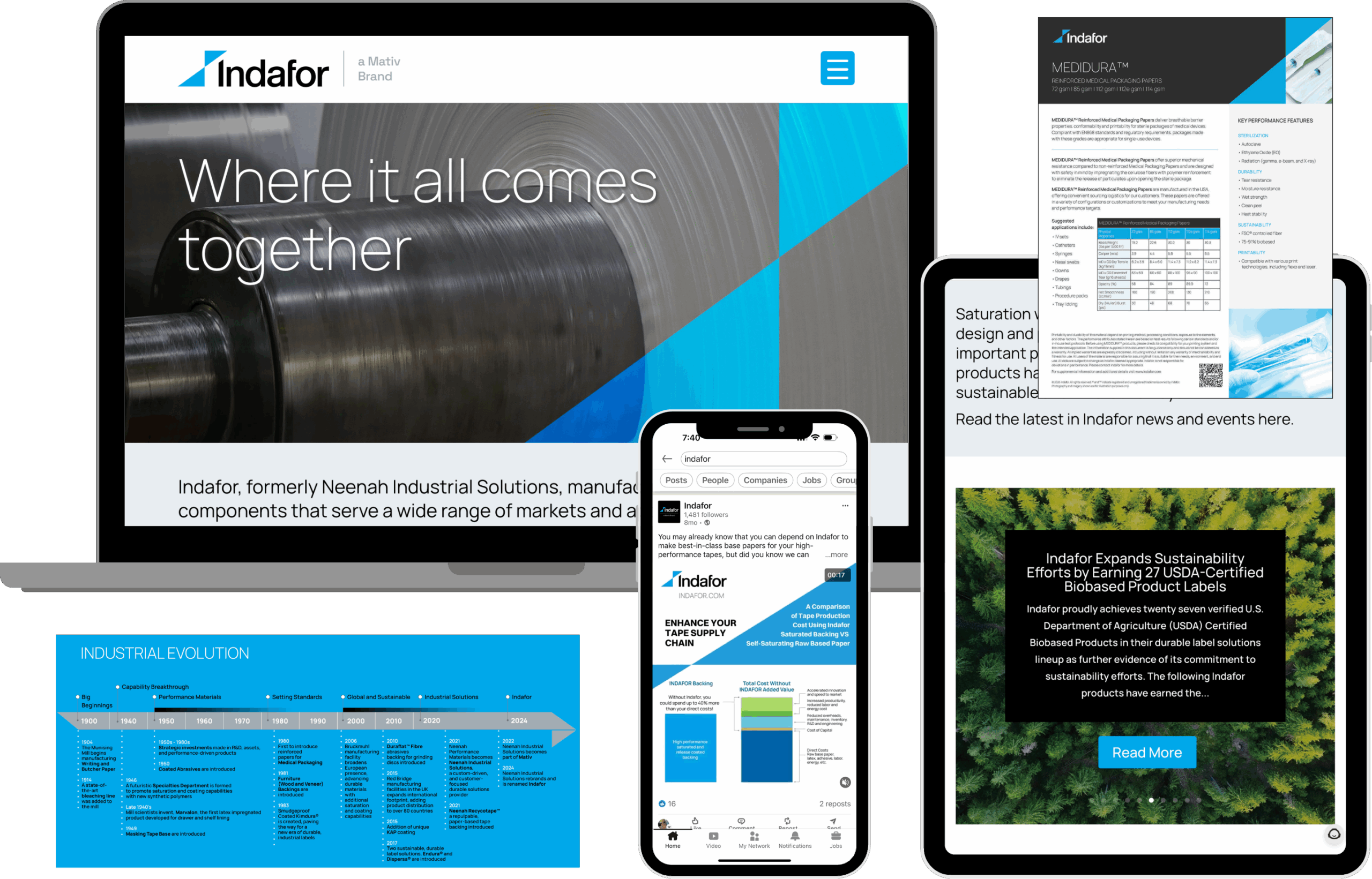
Conventional wisdom says to organize your homepage around products. But when working with Indafor, we found their customers think in terms of markets and applications, not product categories. By restructuring their homepage to mirror their customers’ mental model, leading with industry applications rather than product lines, we created a more intuitive path to purchase and a beautiful website all in one.
New Castle Steel’s Resource-Rich Strategy
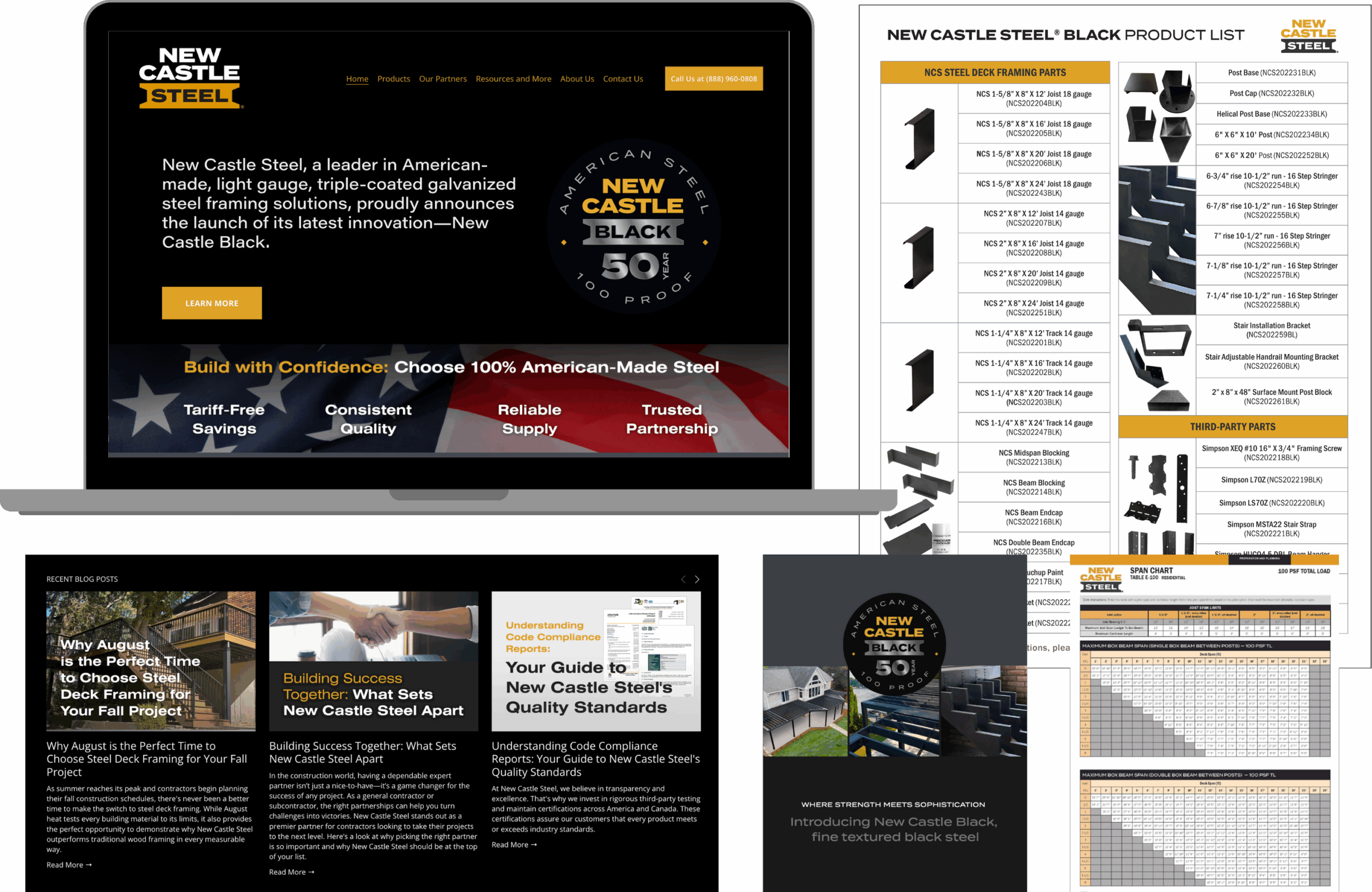
While many homepage guides emphasize minimalism, New Castle Steel’s customers demanded depth. Their technical buyers wanted immediate access to installation guides, component breakdowns, and detailed specifications. Rather than following the “less is more” mantra, we created a homepage that served as a comprehensive resource hub, because that’s what their specific audience needed.
The Real Formula for Homepage Success
So, if there’s no perfect template, how do you create an effective homepage? Start by asking these questions:
- How do your customers actually think about your products or services?
- What information do they need first?
- What does their decision-making process look like?
- What are their common pain points?
- How technically sophisticated is your audience?
The answers to these questions should drive your homepage strategy, not generic best practices.
Finding Your Homepage Sweet Spot
The most effective homepages emerge from three key ingredients:
- Industry Intuition: Deep understanding of your market and how it operates
- Data-Driven Insights: Real user behavior and feedback
- Experimental Mindset: Willingness to test and refine based on results
Remember, your homepage isn’t just a welcome mat – it’s a strategic tool for connecting with your specific audience. While best practices provide a helpful foundation, the real magic happens when you align your homepage with your unique business goals and customer needs.
Ready to rethink your homepage strategy or your website’s overall content? Take our free Website Audit and see where you can improve!
Frequently Asked Questions
What makes a good homepage? A good homepage is built around how your customers actually think and what they need first. Standard elements like a clear value proposition and an obvious call to action matter, but the structure should follow your buyer’s decision process, not a generic template.
Is there a perfect homepage template? No. A template that works for one company can fail for another with a different audience. Some buyers need depth and technical detail. Others need simplicity. The right structure depends on who you serve.
How should I structure my homepage? Start with questions. How do customers think about what you offer, what do they need to see first, how technical are they, and what are their main pain points. The answers should drive the structure, not best-practice checklists.